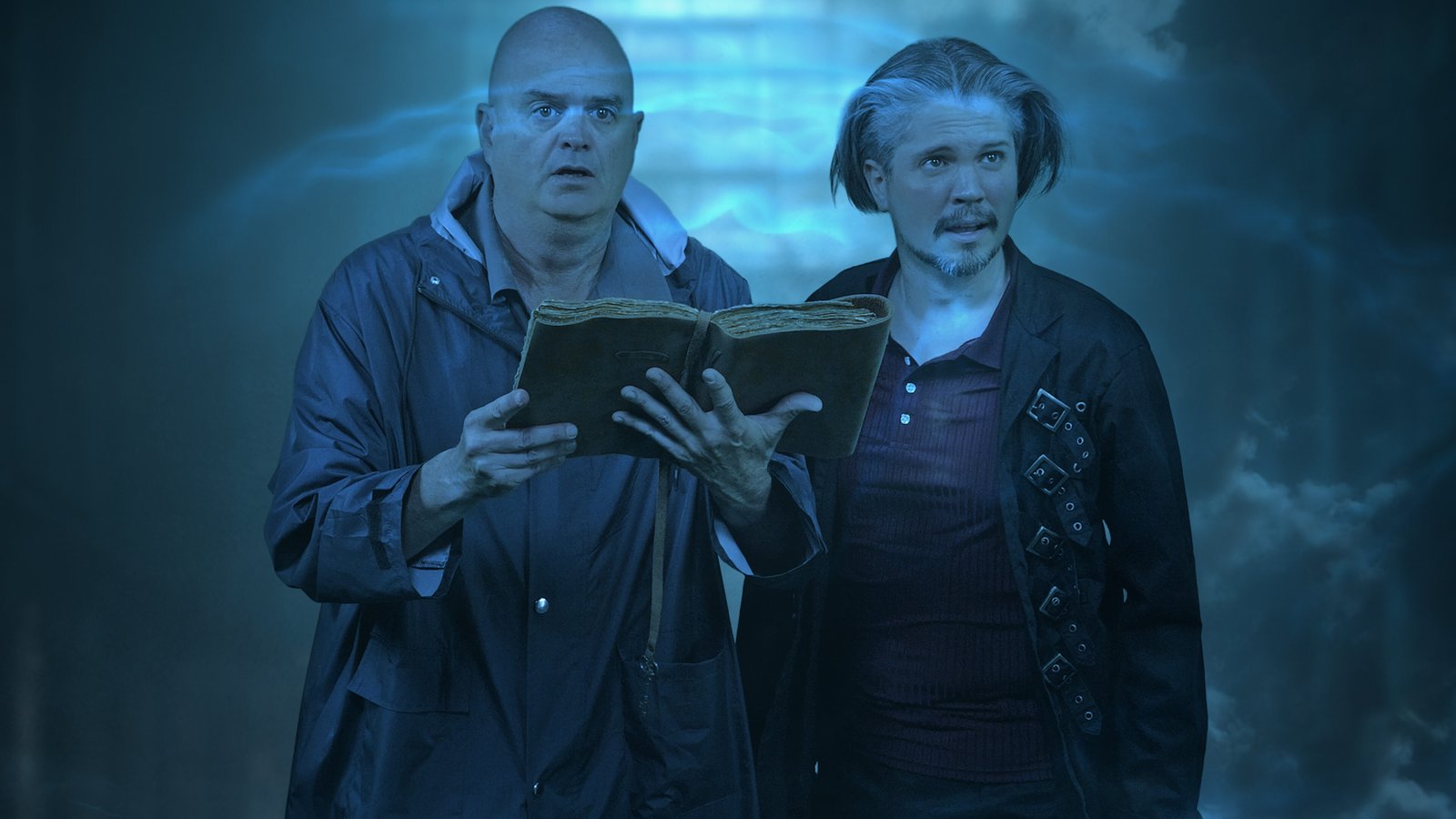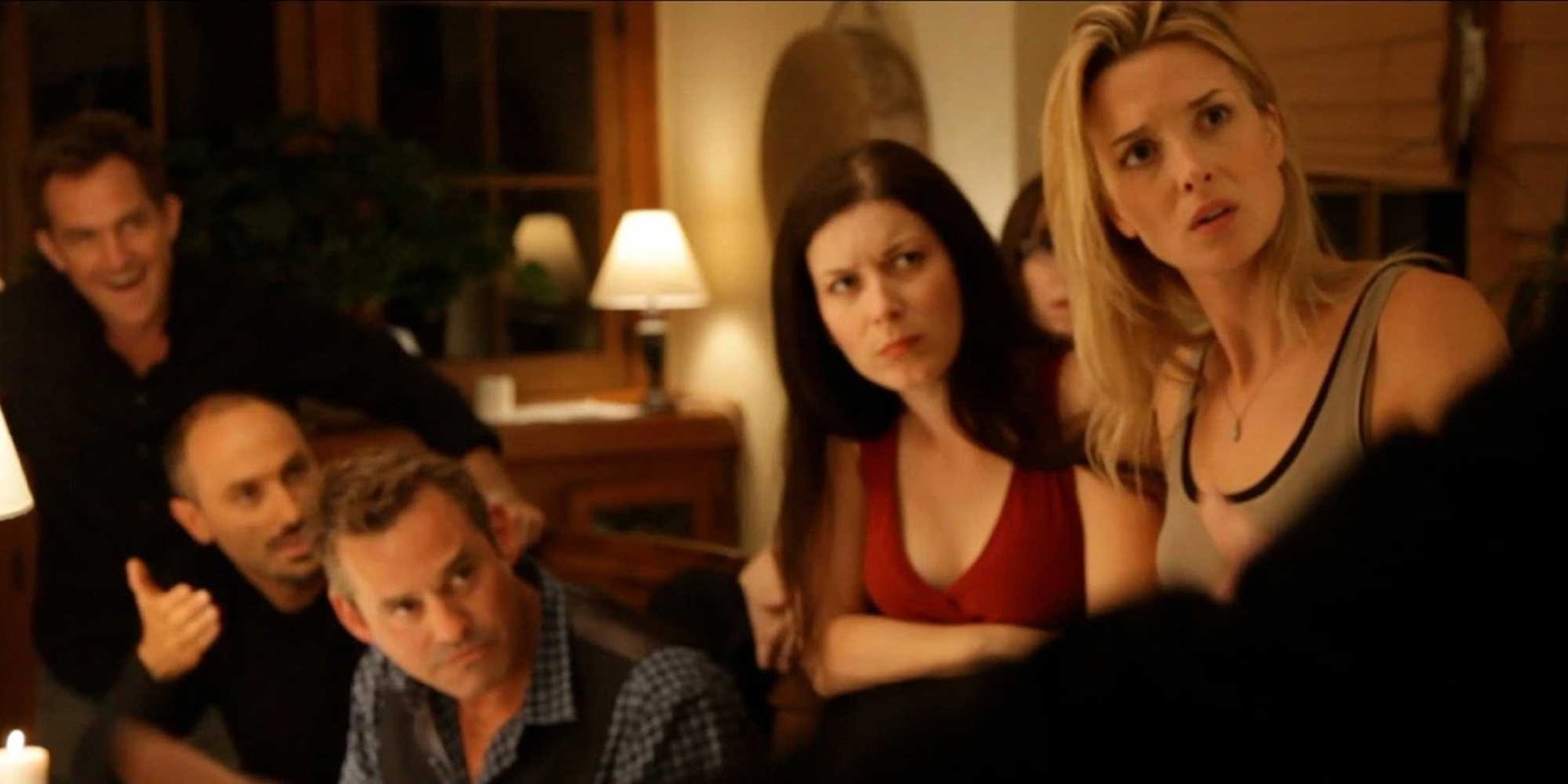
One comet, one dinner party, and nowhere comfortable to sit.
A comet passes overhead and eight friends lose power during dinner. The sensible move is to find a flashlight. The interesting move is to start wondering what the people around the table aren’t telling you. James Ward Byrkit’s 2013 independent sci-fi thriller Coherence understands the appeal of both impulses. Its science-fiction hook may be what gets people through the door, but I’m more interested in what the film does with the guest list. What better place to test your faith in reality than a room full of people who already have different versions of the same evening?
Emily Baldoni is among the guests in an ensemble that includes Maury Sterling, Nicholas Brendon and Lorene Scafaria. After the power fails, the group tries to make sense of what is happening. That’s about as much as I’d tell anyone before they sit down. The wonderful economy of that setup is that a familiar room can suddenly become less reassuring. In a blackout, even ordinary assumptions about the world start to feel like bad bets.
The production was nearly as compact as the premise. The Dissolve reported a five-night shoot in a single location, and that the film was almost entirely improvised. As 366 Weird Movies describes it, Byrkit and Alex Manugian worked out the major story beats in an outline and left much of the dialogue to the actors. Sketches of Time puts the budget at roughly $50,000, a published estimate that comes without a clear accounting of what it covered. Whatever the final bill, five nights and one principal location tell me more about the filmmaking achievement than a dollar figure on its own.
Improvisation can sound like a thrifty alternative to writing, as if somebody saved money by deciding not to buy printer paper. Here it’s a way of splitting the storytelling into two jobs. The outline has to be precise enough for the mystery to make sense; the actors have to sound like people who haven’t been hired to explain it. That division is especially smart for an ensemble thriller. A dinner party is a place where people talk to be understood, to be liked, to get a word in, and sometimes to stop somebody else from getting one in. Those competing aims give the cast more to work with than a communal obligation to announce the next clue.
That approach comes with a pacing problem built in. The more urgently I want to know what a clue means, the less patience I’m likely to have for the ordinary conversational friction that makes these people believable in the first place. The inverse is just as tricky: if everyone becomes efficient about interpreting evidence, the party turns into a meeting that could have been an email. I’m less taken with Coherence as an invitation to diagram what happened than as a drama about who gets believed when nobody has enough information. The cleverness of the puzzle can pull attention away from that nastier, more human question.
What makes the film worth seeking out, especially for anyone curious about independent science fiction, is that its scale is more than a concession. Give the characters a sweeping view of the neighborhood and you give them, and us, information the thriller is better off withholding. Keep them close together and their dependence on one another starts to do work that a visual effect can’t. I wouldn’t hold up Coherence as proof that every small movie should be improvised, or that a clever premise can excuse thin characterization. Its lesson is narrower and more useful: pick a story that would actually lose something if you opened it up. Byrkit can put a comet in the sky, but the more unsettling proposition is right there at the table: you can know these people for years and still have no idea whose judgment you should trust.